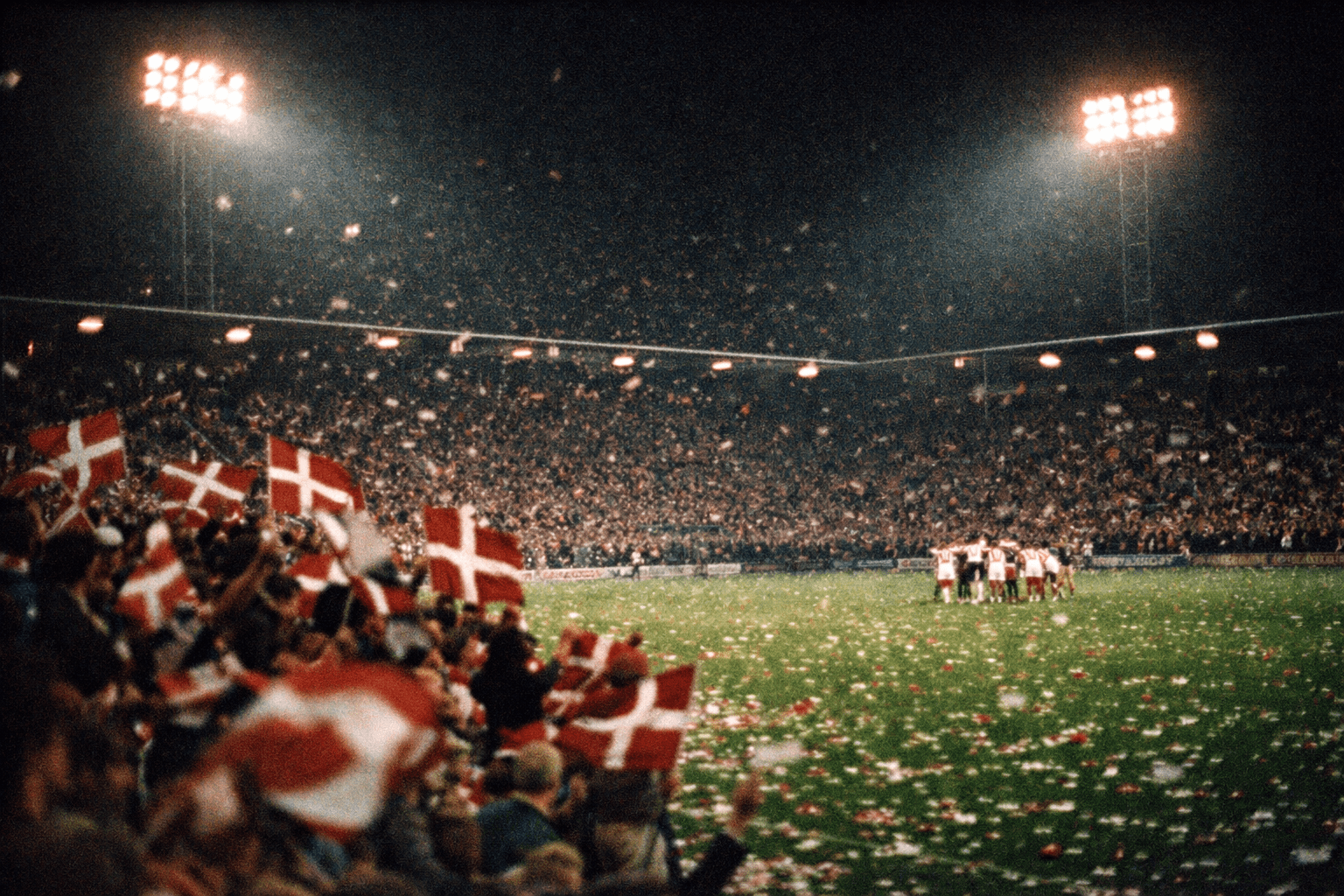
They Were on the Beach. Then They Won the Euros. The Impossible Story of Denmark 1992.
No qualification. No preparation. No chance. Denmark went to Euro 1992 as an afterthought. They came home as champions of Europe.
Football has produced some stunning underdog stories. Greece in 2004. Leicester in 2016. But none of them compare to what Denmark did in the summer of 1992. Because at least Greece and Leicester had actually qualified.
The Phone Call That Changed Everything
Denmark had finished second in their qualifying group behind Yugoslavia. They were out. Tournament over. Players booked their holidays, switched off, got on with their summers.
Then war broke out in Yugoslavia.
On 31 May 1992, just ten days before the tournament was due to start, UEFA and FIFA suspended Yugoslavia from international football due to the Yugoslav Wars. Denmark were runners-up in the group, so they got Yugoslavia’s place at the finals in Sweden.
“There are a lot of stories about us being on the beach,” goalkeeper Peter Schmeichel later told Sky Sports. And he wasn’t wrong. Several players were genuinely on holiday when the call came. They had ten days to prepare for a major international tournament.
To put that in context: most international squads prepare for six to eight weeks before a major tournament. Denmark had ten days.
The Squad Nobody Believed In
To make things even harder, Denmark’s two best players had both quit the national team before the tournament. Brothers Michael and Brian Laudrup were frustrated with manager Richard Møller Nielsen’s defensive tactics and had walked away from international football.
Brian had a change of heart in February 1992 and returned to the squad. Michael didn’t. Denmark went to Euro 1992 without arguably their most gifted player.
What they did have was Peter Schmeichel, fresh off his first season at Manchester United and already one of the best goalkeepers in the world. They had Brian Laudrup, Henrik Larsen, Kim Vilfort and John Jensen. Not superstars. But a proper team.
As Kim Vilfort later said: “We didn’t have the best players, but we had the best team.”
The Group Stage: Nearly Out Before They Started
Denmark’s group contained England, France and hosts Sweden. A nightmare draw for a side with ten days of preparation.
They drew 0-0 with England in their opener. Decent result, but nothing to celebrate. Then they lost 1-0 to Sweden, leaving them bottom of the group. Danish TV commentators signed off from the Sweden match saying Denmark were already eliminated. They hadn’t realised that all the other results in the group had been draws, meaning one win could still send Denmark through.
Their final group game was against France, a side featuring Eric Cantona, Didier Deschamps and Jean-Pierre Papin. Denmark won 2-1. Henrik Larsen and Lars Elstrup scored. France were going home. Denmark were through.
The Semi-Final: Beating the World’s Best Penalty Taker
The semi-final against the Netherlands was extraordinary. The Dutch were defending champions, packed with world-class players. Bergkamp, Gullit, Rijkaard, and Marco van Basten, who was widely considered the greatest striker on the planet at that point.
Denmark took the lead through Larsen. The Dutch equalised. Larsen scored again. The Dutch equalised again. It finished 2-2 after 90 minutes. Extra time came and went with no goals. Penalties.
Schmeichel saved van Basten’s penalty. That was the decisive moment. Denmark won 5-4. The players who had been on holiday two weeks earlier were in the final of the European Championship.
The Final: Beating Germany 2-0
Germany were overwhelming favourites. They were world champions, having won the 1990 World Cup, and had Klinsmann, Effenberg and Matthias Sammer in their ranks. They were expected to win comfortably.
John Jensen was a defensive midfielder who barely scored in his club career. In the 18th minute he smashed a stunning long-range shot into the net. Denmark led 1-0.
Schmeichel made save after save, notably denying a powerful Klinsmann header. Germany pressed and pressed. Denmark held firm.
Kim Vilfort sealed it in the second half. Denmark 2, Germany 0. Champions of Europe.
Schmeichel later said: “It really sank in when we were in Copenhagen in the town hall for the celebrations with the rest of Denmark. That was unbelievable, truly unbelievable.”
The Details That Make It Even Better
The story has layers that get better the more you dig into them.
The back-pass rule: Euro 1992 was the last major tournament before the back-pass rule was introduced, the rule that stops goalkeepers picking up deliberate passes from teammates. Denmark, and Schmeichel in particular, exploited the old rule brilliantly in the final, wasting time by picking up back-passes when they were leading. The rule was changed immediately after the tournament. Denmark got in just under the wire.
The political joke: Denmark’s victory came just days after a national referendum where Danish voters chose to reject the Maastricht Treaty, the agreement that would have made Denmark part of the European Union. When asked to comment, Danish foreign minister Uffe Ellemann-Jensen delivered the line of the year: “If you can’t join them, beat them.”
Kim Vilfort’s daughter: During the tournament, Vilfort left the squad to be with his daughter Line, who was seriously ill with leukaemia. He returned, played in the final and scored the winning goal. Line passed away later that same year. It is one of football’s most moving personal stories.
No professional clubs until 1986: Denmark had no professional football clubs until 1986, just six years before they won the European Championship. Brøndby were the first to turn professional. Football infrastructure that young, producing European champions. Extraordinary.
Why It Will Never Be Repeated
The format has changed. Tournaments now have more teams, longer qualification processes and stricter rules around replacement teams. What happened in 1992, a nation receiving a call ten days before a major tournament, simply cannot happen in the same way today.
Denmark 1992 exists in its own category. Not just the greatest underdog story in football. The greatest underdog story in sport. A team that didn’t qualify, had no preparation time, was missing their best player, and still beat the Netherlands and Germany back-to-back to win the European Championship.
If you wrote it as fiction, nobody would believe it.
Similar Posts
Why AC Milan Dominated European Football in the 1990s
Between 1988 and 1994, AC Milan did not merely win trophies — they redefined what a football club could be. Two managers. Two distinct philosophies. One unbroken dynasty. This is the story of how they did it, why it worked, and what the numbers reveal about one of the greatest periods of dominance in European…
The 10 Most Wasted Talents in Football History
Football is littered with players who had everything: the talent, the physique, the opportunity. And then threw it away. Some burned out through lifestyle choices. Some were broken by injury. Some simply could not handle the weight of their own potential. These are the ten most painful cases of what might have been. 10. Freddy…
Italy miss world cup 2026
In 2018 it was a shock. In 2022 it was a crisis. On Tuesday night in Zenica, Italy lost a penalty shootout to Bosnia and Herzegovina and missed the World Cup for the third consecutive time. At some point a shock becomes a pattern. Italy are now at that point. What Happened The facts are…
The Most Iconic UCL Quarter-Final Upsets in History
The Champions League quarter-finals have a habit of producing the impossible. The right team on the right night, a manager with a plan nobody saw coming, a goalkeeper who saves everything, a loaned-out striker scoring against his own club. History is full of moments where the form book was torn up completely at the last…
Six Games That Defined the Weekend: LaLiga, FA Cup and More
What a weekend of football. Six games, six stories worth talking about. A relegation club ended Real Madrid’s title dreams. Barcelona took a giant step toward the LaLiga crown. Bayern Munich came back from the dead. Haaland destroyed Liverpool. Southampton shocked the world. And a hat-trick hero opened a new Allsvenskan season in style. Here…